

Skip to content
Get Andi for iPhone

A manifesto for a new category of AI

Family Intelligence.

The most important system you belong to deserves an intelligence of its own.

A family is a shared life: different people, connected needs, years of history. This is the case for AI built around that whole. We call it Family Intelligence.

Read the case

The work between the events.

It is 7:14 on a Tuesday morning. A mother stands in her kitchen, phone in one hand, permission slip in the other, doing math no app was designed to help with.

A family at breakfast. A mother laughs with her two children over cereal while their father makes coffee.
What the picture doesn’t show.

Her son has practice at 4:30. The orthodontist just moved to 4:15.

Her daughter needs a ride to a friend’s house by 5, and the babysitter doesn’t know about the nut allergy, or where the backup EpiPen is.

Dad is traveling. Grandma can help, but only if someone briefs her on the pickup rules, the homework situation, and the fact that the coach changed the practice field this week.

An early-dismissal notice for Friday is sitting in a three-day-old school email. A dentist appointment was confirmed somewhere in last month’s texts. It may or may not still be on the calendar.

None of this is dramatic.
None of it is unusual.
It is just Tuesday.

Every thread runs back to one person. Not because anyone decided it should. Because she is the one who knows.

Researchers have a name for this: cognitive household labor. The anticipating, remembering, deciding, and monitoring that keeps a household running. It rarely shows up on a calendar, and it is rarely shared evenly. It carries a real cost in stress, burnout, and strain on the relationships it’s meant to protect.

Your family is one of the most complex systems you will ever belong to. Every person has a different perspective. Every relationship carries history. A change in one part of life ripples through everyone else. And when handing something over means explaining everything again, the same person keeps carrying it. Sharing the work starts with sharing the understanding.

Containers are not intelligence.

Families already have calendars, lists, group texts, school portals, and location apps. Each one holds part of the story. The harder question is how those parts become a shared understanding of the whole family.

In a family, the calendar isn’t where decisions get made. It’s where they get written down, after the real negotiation has happened in conversations, texts, and someone’s head. It stores the event. It doesn’t know what the event means.

What the calendar holdsOne family. One week.A change is only the beginning.
4:15OrthodontistMoved
4:30PracticeOverlap
6:00Babysitter
FridayEarly dismissalNot yet added
School emailFamily textsWhat someone knows

The details live in different places.
The consequences don’t stay there.

What the change means for this family

Tuesday · 4:15 pm

One appointment moves. Four things change.

  1. The collision

    The orthodontist now overlaps practice at 4:30.

  2. The people

    Someone else has to drive. Grandma is free on Tuesdays.

  3. The handoff

    She needs the pickup rules, the homework plan, and the new field.

Tuesday · 6:00 pm

Same sitter. Something important changed.

  1. The care

    Your daughter has a nut allergy. The backup EpiPen moved to the hall closet.

  2. The right boundary

    The sitter needs that tonight, and nothing else from the medical file.

Friday · Early dismissal

A school email changes Friday.

  1. The missing plan

    The notice is buried in a school email. No one has been assigned.

  2. The possibility

    Dad is back Thursday. He could help if someone asks.

  3. Before it becomes urgent

    Decide before then, and tell whoever picks up.

Somewhere in last month’s texts

An agreement that never became a plan.

  1. The loose end

    A dentist appointment was agreed in a thread last month. It never reached the calendar.

  2. Close the loop

    Check it before it becomes a missed appointment.

The calendar holds the event. Understanding holds the consequences.

This is not an interface problem. It is an architectural one.

Storing events, lists, and locations is only the beginning. Family Intelligence needs to understand the relationships between those things: who is responsible, what depends on what, what changes when plans shift, and what the babysitter needs to know tonight that is different from last week.

As AI assistants become more capable, their understanding of the people they serve matters more. A family needs intelligence built around the household itself: everyone in it, what they’ve decided, what depends on what, and who is allowed to know. That understanding has to keep growing as the family changes.

AI is entering family life.
Who is it built for?

The parent trying to hold the week together and the child trying to understand the world belong to the same family. Their needs are different. Their lives are connected.

Help carrying a shared life.

Parents need more than an answer to the question they remembered to ask. They need help noticing what matters, understanding who it affects, and carrying a decision through without briefing everyone again.

Room to become yourself.

Children need guidance that changes as they grow. A family’s values matter. So do a child’s own voice, privacy, and growing independence. Knowing a family should make room for each person in it.

The opportunity now

As AI moves from answering questions to remembering, reasoning, and acting, the possibility changes: it could help carry the work between people, over time. But greater capability alone cannot decide whose needs matter, what a family values, or who should have a say.

That is why the family must be the starting point. A shared understanding, with different boundaries for different people. A memory that changes as life does. Intelligence accountable to the family it serves.

The opportunity is bigger than organizing a household.
It is giving a family more room to be a family.

Family Intelligence

  1. An intelligence that knows your family

    AI built around a shared understanding of a family: its people, relationships, commitments, routines, needs, and values.

    It remembers over time, connects what matters, thinks ahead, and helps the right people act with permission.

  2. Built for connected lives

    The family is the unit AI is built for. Distinct people, with a shared life. Across one home or two, with co-parents, grandparents, caregivers, and everyone trusted to help.

See also: what a family already does every day, mostly in one person’s head.
As models grow more capable, this matters more, not less. Intelligence that can act needs to know whose life it is acting in.

This category is defined by what it takes responsibility for: the understanding that connects a family’s people, decisions, and care over time.

The more an AI can do, the more it matters that it understands what a change means for your family, and who should decide what happens next.

From one person’s memory to a family’s understanding.

The promise is that one person no longer has to be the only one who knows.

Today, every thread runs through one person. Every change has to be noticed, interpreted, and passed on by whoever already knows the most. Family Intelligence moves the understanding, not just the tasks.

When a shared picture holds what one person used to carry, help can come from anyone, and each person gets what they need to act.

Today. Every change routes through one person. She notices it, works out who it affects, and tells each of them.

For example Coach changed the field. Mom hears first. She tells Son. Then she tells Grandma. Every handoff runs through her.

One understanding.
A whole life of possibility.

These are illustrations of the future this category should make possible. Memory, relationships, anticipation, and permission work together across all of them. Permission governs what can be remembered, shared, and done throughout.

Choose a part of family life

Story 1 of 6 Music

Read the four steps

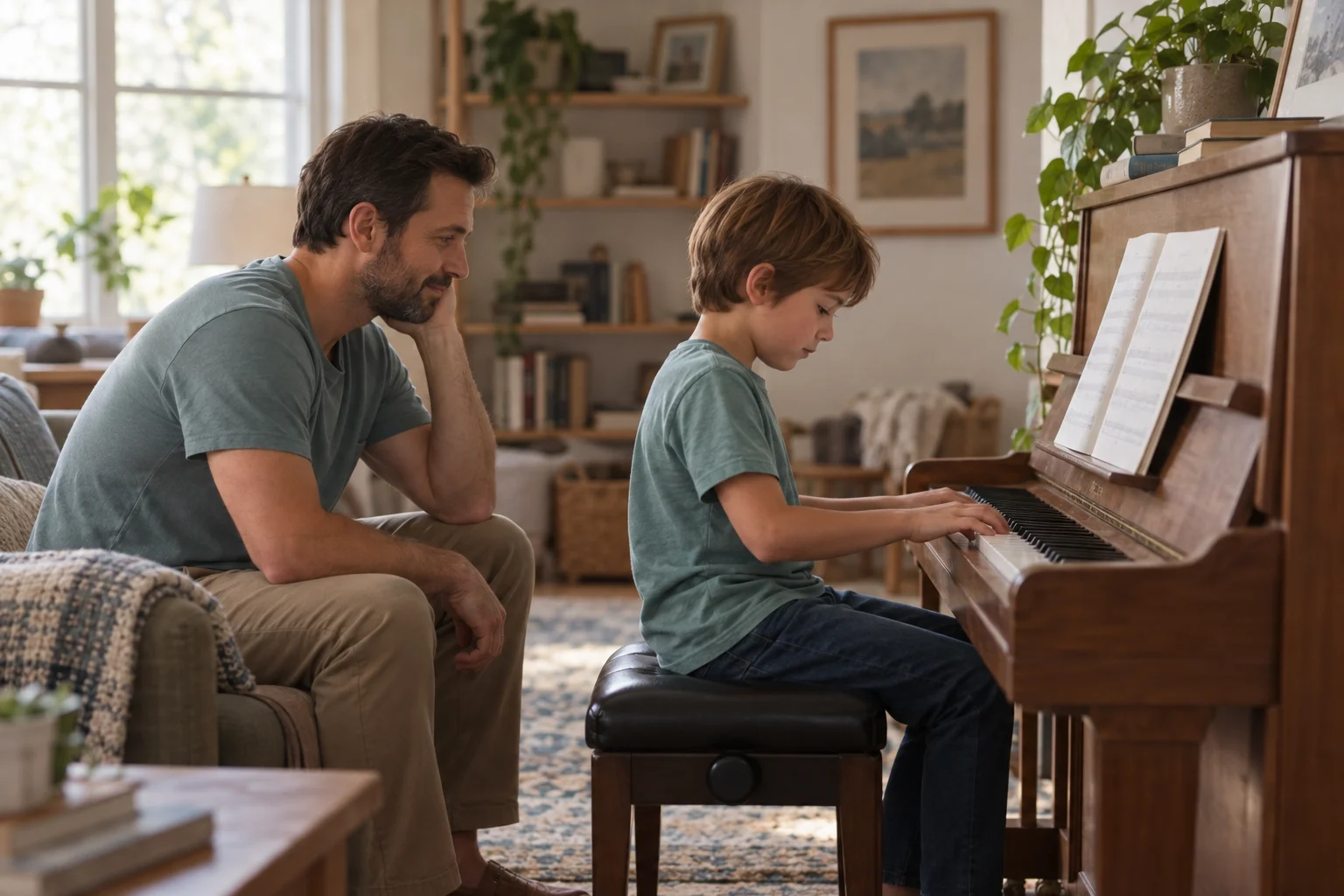
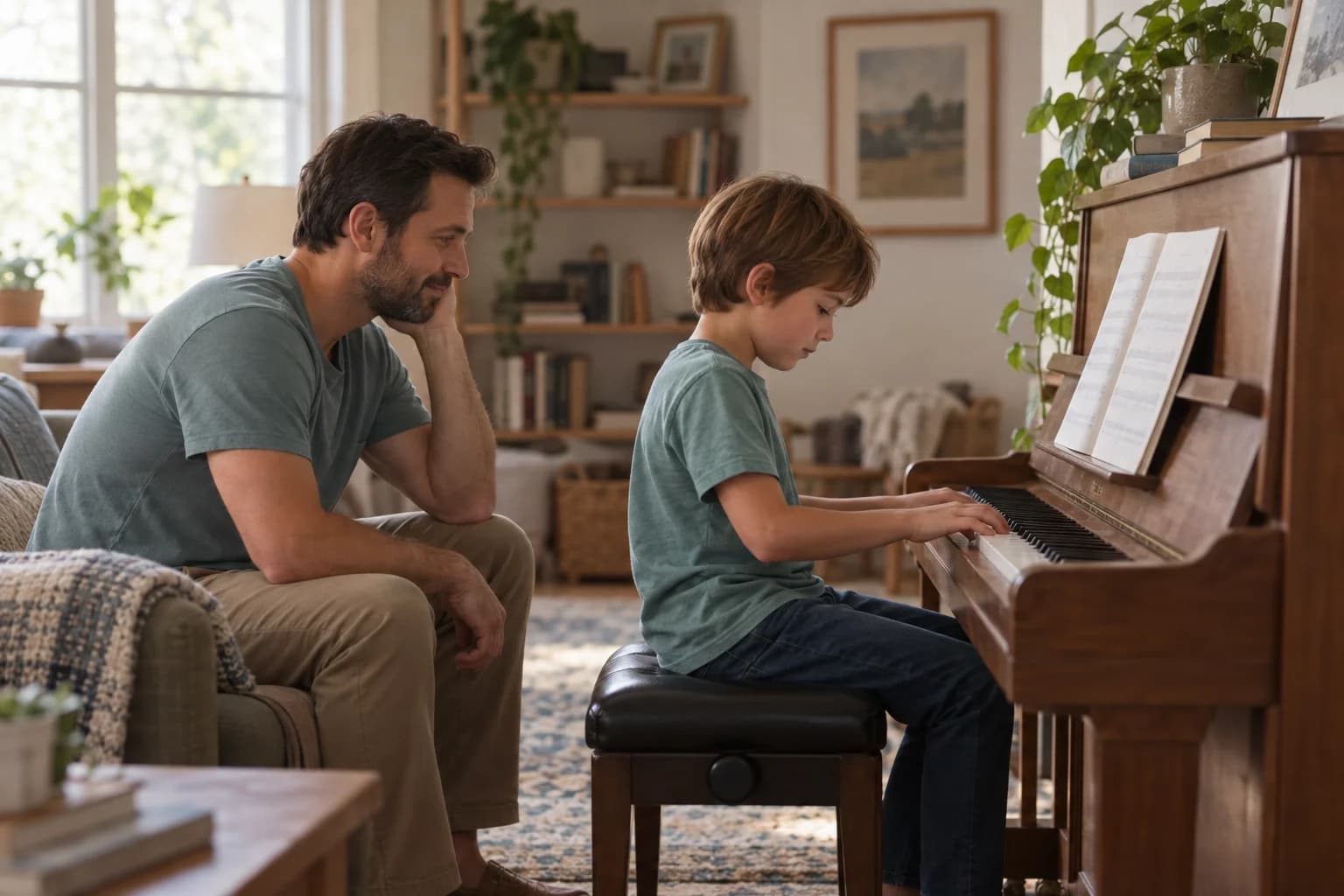
A father listens as his son practices the piano at home.
Music“I love music. I dread practice.”
  1. Remember

    A living memory built from what the family chooses to share. What matters, who said it, when, and whether it is still true.

    In this storyA child has loved piano for years. Recently, they said practice feels overwhelming. Both belong in the picture; yesterday’s enthusiasm is not a permanent preference.

  2. Connect

    Relationships give information meaning. A practice is also a friendship, a commitment, and a ride home.

    In this storyThe difficulty may be the pace, not the music. Their joy in improvising, the teacher’s expectations, and a family value of keeping commitments all matter. The AI should ask, not assume.

  3. Think ahead

    Notice what needs attention before it is urgent, weigh options against your priorities, then help carry out the actions you authorize.

    In this storyBefore the next term, Andi could help the child compare a lighter schedule, a different way to learn, or a pause. It could help the family talk through the tradeoffs, then carry out the plan they choose.

  4. Ask permission

    Share only what each person needs, only with permission, and keep a visible record of what it did, for whom, and why.

    In this storyA private conversation is not a teacher briefing. Andi should ask what may be shared, show the proposed message, and get permission before contacting anyone.

Story 1 of 6 · Music
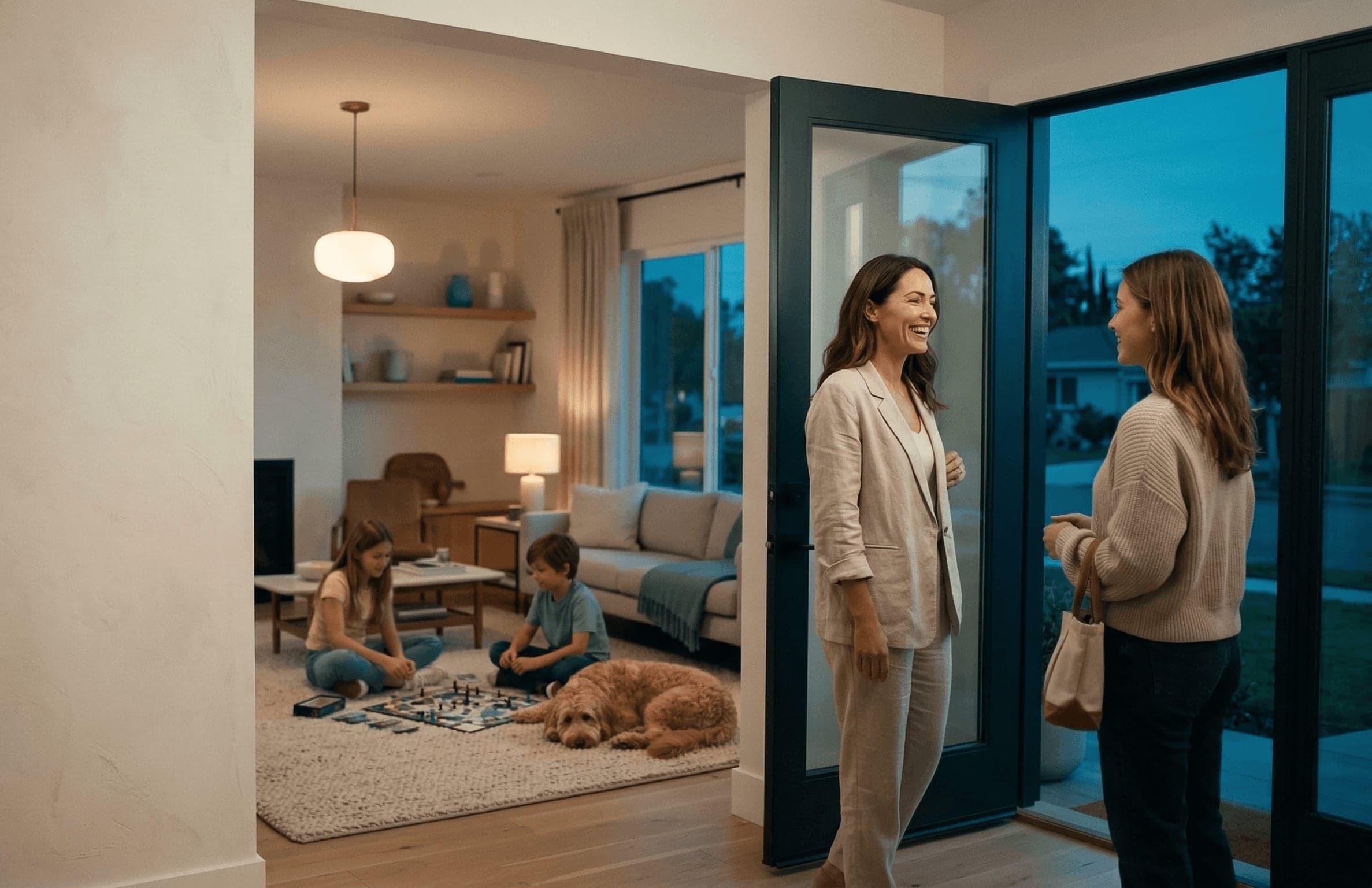
Evening at the front door. A mother greets the babysitter while the children play a board game with the dog in the living room behind them.
Thursday, 6:02 p.m.The babysitter arrives. What should she know?

Everyone gets the right view. No one gets everything.

Modern families don’t have clean edges. Co-parents across two homes. Grandparents who help three days a week. Sitters, coaches, tutors, teachers.

The handoff, the moment responsibility moves from one person to another, is where things fall through. A family’s intelligence should know who is asking, what they need, and what they have permission to know or do. Without that, families will never trust it with enough to be useful.

The shaded slice is how much of the family’s shared understanding that person sees.

Who’s asking?

The babysitter, tonight

ViewTonight only

Sees

  • Tonight’s routine and bedtime rules
  • The nut allergy, and where the backup EpiPen is
  • Who to call, and in what order

Doesn’t see

  • Medical records
  • The parents’ schedules
  • Private family conversations

Access for tonight only. If a friend calls about a weekend plan, she knows to defer to a parent.

Saturday morning, a parent can see what was shared, with whom, and why. Not surveillance. Accountability.

It should grow with them. And step back as they do.

A family’s memory should help a child grow into themselves. It should never hold them to who they used to be.

An eight-year-old asking for help with math should get questions that build their thinking, not answers. A teenager talking about stress deserves coaching that respects their growing autonomy, and a nudge toward a trusted adult when it matters. Developmental understanding, not content filtering, should shape the experience.

  1. A young boy lies on the living-room rug beside his notebook, chin on his fist, thinking.

    Age 7. Curiosity needs encouragement

    “Let me try.”

    A child learning to think needs patient questions, room to make mistakes, and the confidence to try again. An intelligence that knows them should build their ability, not take its place.

    Help them become more capable.

  2. A preteen girl at her desk in the evening, pencil in hand, looking up from her homework.

    Age 12. A self taking shape

    “This is who I am.”

    New interests. Changing friendships. A voice becoming their own. AI can help them work through a difficulty or explore an interest, while letting go of old assumptions about who they are.

    Stay curious about who they’re becoming.

  3. A teenager sits in a window seat with an open book, looking out at the street.

    Age 17. Independence needs room

    “I’ll take it from here.”

    The first big decisions that are theirs to make. AI can help compare paths and think through consequences, then leave the choice with them. Sharing their plans with a parent should begin with asking.

    Let independence grow alongside trust.

  4. Their story
    to write.

    Age 25. A life of their own

    “Some things stay with you.”

    An adult decides which traditions to carry forward, which memories to keep, and what to share. Family understanding should honor that choice, even as the circle grows.

    A shared history. A future they choose.

Illustrative life stages, not a feature demonstration. Every family’s story unfolds differently.

Knowing a family is a privilege.

The stakes in a family reach into how children grow, how relationships hold together, and how people care for one another.

The closer AI comes to family life, the more accountable it has to be. Trust can’t be a feature added later. It has to be how the whole thing is built.

  1. A memory you can question.

    Every fact should have a source, a date, and a trail. See what the AI believes, where it learned it, and whether it is still true. Correct it. Change it. Ask it to forget, and know that deletion actually deletes.

  2. Consent that is granular.

    “Accept all” isn’t good enough when a nine-year-old is involved. What is collected, what is shared with caregivers, what shapes personalization, and what happens when an account is closed should each be a separate choice.

  3. Neutral across homes.

    When a family spans two households, the AI can’t take sides or quietly favor one version of the week. Family information must never become a weapon.

  4. Your family stays inside its boundary.

    The AI should understand this family better over time, without using what it learns to serve anyone else. No advertising model. No selling family data. The business has to be aligned with the trust.

  5. Permission that means something.

    What a caregiver can know. What an assistant may do. What a growing child chooses to keep private. And a clear record of what the AI did, for whom, and why.

  6. A purpose beyond the screen.

    The measure is more room for each other. More confidence sharing the load. More space for children to become themselves. Family Intelligence earns its place through the life it helps make possible.

This is why we’re building Andi.

Family Intelligence is the category. Andi is what we’re building to bring it into family life: an AI that actually knows your family, remembers what matters, and helps carry the work that usually lives in one person’s head.

Our direction brings together Family Memory, Care Share, and a Kid Companion: shared understanding, trusted handoffs, and support that grows with children. They belong together because family life already does.

The models will keep getting better. Our conviction stays the same: families deserve intelligence built around their lives, their values, and their choices.

That conviction is overdue.